Longevity Clinic Business Model: How the Money Works



Longevity Clinic Business Model: How the Money Works

Owners usually come to us with a list of services and a rough idea of what each one sells for. That is a menu. It is not yet a business model.
A business model answers three questions: where the money comes from, where it goes, and what has to be true for the first number to stay larger than the second. Here is how we lay it out for the longevity clinics we build and run.
The market behind the longevity clinic business model
The demand side is strong, and it is measured. The risk side is measured too.
| What the research found | Source |
|---|---|
| The global wellness economy reached $6.8 trillion in 2024 and is forecast to reach $9.8 trillion by 2029. | Global Wellness Institute |
| Personalized medicine is a $147 billion market, projected to grow about 9.3 percent a year through 2029, driven by people paying for diagnostics and concierge-style care. | Global Wellness Institute |
| About 40 percent of consumers worldwide say current wellness offerings fall short in areas that include longevity. | McKinsey, Future of Wellness |
| Nearly 60 percent of US respondents call healthy aging a top or very important priority. | McKinsey Health Institute |
| About one in five new businesses exits within a year, and roughly half exit within five years. | JPMorgan Chase Institute |
Read the first four rows as opportunity and the last as a warning. People want what a longevity clinic sells. Wanting it does not keep a badly run clinic open.
Where the revenue comes from
Most longevity clinics have five possible sources of revenue. They do not behave the same way, and the mix between them is the heart of the model.
| Revenue source | How it behaves | What it depends on |
|---|---|---|
| Memberships | Recurring and predictable. You know most of next month on the first day. | Retention, which depends on visible progress and a person who owns the relationship |
| Programs and packages | Larger commitments over a defined period. Strong cash flow up front. | A consultation that ends in a plan, and re-enrollment at the end |
| Assessments and diagnostics | The front door. Often modest on its own, but it starts everything else. | How well the results are explained and turned into a plan |
| Single services | Unpredictable. Every visit has to be sold again. | Constant new demand and marketing spend |
| Retail | Small per sale, useful in total, and helps patients follow the plan. | Whether products are part of the plan or just on a shelf |
In the clinics we run, the goal is for memberships and programs to carry the business, with single services as the exception. A clinic that lives on single services starts every month at zero. For how to design a membership patients keep, we have a full guide on Will Barton Ventures: How to Build a Wellness Clinic Membership That Patients Actually Keep.
Where the money goes
The cost side of a longevity clinic is simpler than most owners expect. There are six lines that matter.
- People. In the clinics we work with, this is nearly always the largest cost. It includes the front desk, consultants or coaches, clinical staff and management.
- Clinical oversight. Your medical director and providers. Their time is the most expensive in the building, so the model has to protect it for medicine.
- Cost of care. Labs, medications, supplies and anything consumed in delivering a service. This rises with volume, which is healthy.
- Space. Rent, build-out and utilities. Fixed, and paid whether rooms are full or empty.
- Equipment. Payments and service contracts. Also fixed. We cover how to keep this line under control in Longevity Clinic Equipment: What to Buy First and What Can Wait.
- Marketing and software. The cost of producing an inquiry, and of the systems that track what happens to it.
Notice how many of those are fixed. People on salary, rent and equipment payments do not shrink in a slow month. That is why predictable, recurring revenue matters so much in this model, and why a clinic with a large fixed base and mostly one-time sales is fragile.
The conversion math that decides everything
Two clinics can have the same services, the same prices and the same marketing budget, and produce very different results. The difference is what happens to an inquiry after it arrives.
The table below is an illustration, not an industry statistic. The trained column uses the standards we train teams to reach. The untrained column is an example of a clinic with no written process, shown for comparison.
| Step | Untrained clinic | Trained clinic |
|---|---|---|
| Qualified inquiries in a month | 100 | 100 |
| Book a consultation | 40 | 75 |
| Show up | 26 | 64 |
| Enroll in a program or membership | 10 | 56 |
Same marketing spend. More than five times the enrolled patients. No change in price, equipment or service list.
This is why we tell owners that the business model of a longevity clinic is really a conversion and retention model with medicine at the center. If you want the full list of numbers to track weekly and who should own each one, see The 12 KPIs Every Wellness Clinic Should Track Weekly.
Three versions of the model
Membership-led
Patients join at a monthly rate that includes regular visits, monitoring and coaching, with therapies added as needed. This is the most stable version. It asks the most of your team, because someone has to keep every member engaged.
Program-led
Patients enroll in a defined program, often three to twelve months, built around a goal. Cash flow is strong at enrollment. The risk is the end of the program: without a planned next step, the patient leaves at the moment they are happiest.
Menu-led
Patients buy services one at a time. It is the easiest to launch and the hardest to live on. Most clinics that start here end up moving to one of the other two, usually after a hard year.
Many good clinics blend the first two: an assessment, then a program, then a membership that keeps the patient after the program ends.
What breaks the model
- The provider does the selling. It uses your most expensive hours on a task most providers dislike. We explain the alternative in Providers Provide, Consultants Consult.
- Discounting to close. A discount trains patients to wait for the next one and takes margin out of every sale after it.
- Too many services. Each one adds supplies, training and something else to explain. The team cannot sell what it cannot describe.
- Nobody owns retention. If no one is responsible for keeping members, they leave quietly. A trained coach solves this, and we cover it in how to build a health coaching program inside your clinic.
- Fixed costs set for a clinic twice the size. Too much space and too much equipment, bought on a forecast.
None of this is theory for us. I founded Options Medical Weight Loss in 2014, and we scaled it into one of the largest privately held medical weight loss companies in the United States before exiting to private equity in 2022. What made it scale was a model where revenue repeated and every location converted and retained patients the same way. The Options founding story tells how that model was built.
What to do Monday morning
Pull last month’s revenue and sort it into the five sources in the table above. Then write down what share of it will repeat next month without a new sale. If that share is small, you have found the first thing to fix.
If you want help building the model or finding where yours is leaking, that is the work our longevity clinic consulting team does. Many owners start with a 360 Operational Audit, which follows a patient from first call to renewal and shows where the numbers fall off. You can read about our team on Our Story.
Common questions
How do longevity clinics make money?
Through memberships, defined programs, assessments and diagnostics, single services and retail. The strongest clinics earn most of their revenue from memberships and programs, because that revenue repeats.
Is a longevity clinic profitable?
It can be, when most revenue is recurring, fixed costs match the size of the patient base, and the team converts and retains patients well. Clinics that depend on one-time services with high fixed costs tend to struggle.
What is the biggest cost in a longevity clinic?
In the clinics we work with it is nearly always people, followed by clinical oversight, cost of care, space, equipment and marketing. Several of those are fixed, which is why predictable revenue matters.
Should a longevity clinic use memberships or packages?
Many use both: an assessment first, then a defined program, then a membership that keeps the patient once the program ends. The right mix depends on the patient you serve and the services you offer.
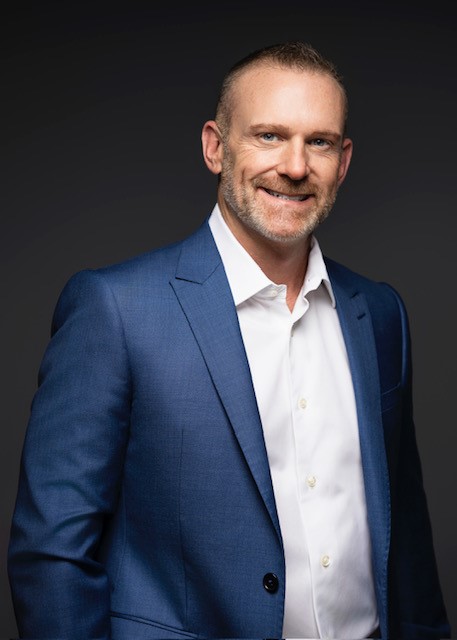
Will Barton
Founder and Managing Partner, Method Clinic Partners
Will has spent more than 20 years building wellness businesses, more than 50 of them across 8 states. He founded Options Medical Weight Loss in 2014, scaled it into one of the largest privately held medical weight loss companies in the US, and exited to private equity in 2022. He now advises clinic owners on operations, sales systems, training and leadership, and is a member of the American Academy of Anti-Aging Medicine (A4M).
Find out what your clinic could be doing.
Thirty minutes with our partners. No obligation and no pitch deck. Just a straight conversation about your clinic and whether we can help.
Start the conversation
Tell us a little about your clinic and we will send you a link to pick a time.
No obligation. We take a limited number of clinics at a time.